In my travels today, I discovered it is Douglas Engelbart's birthday today!
Happy 86th birthday, computer genius and computer mouse inventor!! :)
Sunday, January 30, 2011

Response to Reading 2.1 - Personal Relationship On and Off the Internet
This reading, based around personal relationships that are formed and maintained through online communication and its impact upon offline relationships, was very interesting. It discussed both negative and positive viewpoints about upholding online relationships, both of which I can relate to. I’d like to discuss some points that reading this article has brought to mind.
Daft and Lengel (1986) argue that people should choose face to face interactions over impersonal written media, in today’s computer and Internet driven society, this poses to be a significant problem for some. I know that personally, I prefer the less rich form of media where I can write/email/text people, particularly people I do not know well. For me, this is an issue with self confidence; I am mostly scared of confrontation and written confrontation is more easy to bear than that which occurs face to face. Therefore, if I ever need to contact anyone of importance, or have an issue/problem of which I wish to dispute, I will always attempt to email the person first in preference of making a phone call or a face to face visit. Does this mean I am socially impaired in some way? Has the Internet and its ease of impersonal communication harmed my social skills?
Another interesting point that was raised in this reading was the result of a study completed in 2002 which tracked the Internet use of 948 Americans to see if it harmed ‘real-life’ social relationships. The results found few differences in patterns of communication between those that do and do not use the Internet (Robinson, Kestnbaum, Neustadtl, & Alvarez, 2002). Personally, and from my own experiences, I find this to be quite wrong. I know this may not be the case for a lot of Internet users, but I know that the Internet has impacted the lives, or lack thereof, of many people I have known both in ‘real-life’ and online. It may sound silly, but Internet addiction is rather common and it does impair one’s ability to interact functionally in day to day society; with frequent Internet users known to stay up all night using the Internet or playing games, choosing to interact online rather than offline, making and maintaining friendships online rather than offline. I know that when I was younger my Internet use impacted upon my results at school and my family was concerned about the amount of time I spent on the Internet, but luckily for me it was a novelty that did wear off. I do still use the Internet a lot, but to a lesser extent and for different purposes than when I was in my late teens and early 20s.
These are only two points that occurred to me whilst doing this reading, but to me, they both revolve around the same principal. I think that the Internet is a haven for those who have low self-esteem and self-confidence. It allows people to form friendships/relationships with people that may be difficult or impossible for a person to do in real-life, it allows people to not feel ashamed or scared about how people will judge their looks, ethnicity etc; therefore allowing one to have an identity and confidence online that is unable to be portray to the real world. I think it is these types of people, which do include myself, that are impacted by the points that I discussed above.
References
Boase, J., & Wellman, B. (2004). Personal relationships: On and off the Internet. Retrieved January 2011, 29, from http://homes.chass.utoronto.ca/~wellman/publications/personal_relations/PR-Cambridge-Boase-Wellman-ch2-final-doc.htm
Daft, R., & Lengel, R. (1986). Organizational information requirements, media richness and structural design. Management science , 32, 554-571.
Robinson, J., Kestnbaum, M., Neustadtl, A., & Alvarez, A. (2002). Information technology and functional time displacement. IT & society , 1, 21-36.
Saturday, January 29, 2011
Tutorial Task 2.1 - Optional - Google Yourself!
Ok, so I took a minute or two to Google myself.. and have to say I was pleasantly surprised!
In the 'everything' search, it came back with 15 hits. All of which are things I am aware of and don't really reveal anything about me that I don't wish to be known; such as, my profile page that was created for fundraising for the Bridge to Brisbane and my Threadless t-shirts profile (perhaps people knowing what witty shirts I like to buy is a bad thing?!).
I did an image and search result for my full name and only one image came up, which was one of my profile pictures from Facebook. Not sure why that one isn't private, like the rest of my pictures, but I am not too concerned at this point.
I'll just have to make sure I regularly Google myself so I am aware of what aspects of my life are being shared with the world!
Tutorial Task 2.1 - Scavenger Hunt
So for this tutorial task, we have to use a search engine to find the answers to a list of given questions, without using Google or Wikipedia. I, thinking I am completely hilarious, am going to use Ask.com. I wouldn't normally use this search engine, but 'back in the day' this was called Ask Jeeves, and I found the concept amazing that I could type in a question and it would give me the answer!
So here I go, I am going to 'Ask Jeeves'!!.
1. What is the weight of the world’s biggest machine? How much did it cost to build?
This question tends to be a little ambiguous, as it asks the weight for the world's biggest machine but doesn't specify if biggest refers to heaviest or largest in physical dimensions.
One machine that would definitely be in contention for the winner of the heaviest machine would have to be the Knock Nevis, which is the world's largest supertanker and weighs a whopping 564 763 tonnes. The Knock Nevis cost an estimated $9 billion to be constructed.
In regard to actual physical size and dimensions, what I believe to be the world's largest machine is the Large Hadron Collider
, a particle accelerator located near Geneva, Switzerland. This machine has a length of 27km and a circumference of approximately 175m. The Large Hadron Collider cost approximately $8.4 billion in total to construct.
Sources:
http://www.bukisa.com/articles/40463_worlds-largest-machines-ever-built
http://www.vincelewis.net/viking.html
http://www.wisegeek.com/what-is-the-largest-machine-in-the-world.htm
http://www.moneyweek.com/news-and-charts/economics/what-is-the-worlds-biggest-machine-costing-us-13577.aspx
2. Find a live webcam in Antarctica. Can you find a place to stay in Antarctica?
<a href="http://www.live-webcam-directory.com/antarctica/live-webcam-mawson-station.html" title="Mawson Station live webcam">Mawson Station Live Webcam</a>
This links you to the live webcam at Mawson Station, Antarctica. This is a still image taken from the webcam.

Now, as for a place to stay in Antarctica, short of camping (brrr, forget that!), your best bet for accommodation is on a boat/ship as, apparently, there are no hotels physically located on the mainland. An example of a vessel that could be utilised as accommodation is the Aleksey Maryshev, which is not only a research vessel but also provides accommodation for up to 46 travelers.

Sources:
3. When and what was the first example of global digital communication?
Before I officially answer this question, can I just say that in the search results that I was perusing about global digital communication, I found a link to the contact information for Ozzy Osbourne.. Hmm, ok?! How very odd!!
Anyways, back to the real answer..
In 1837, line telegraphy was perfected and was noted as an important event in the history of electronic communication. In following years, things such as the telephone and wireless telegraphy were produced, improving communication systems further.
Sources:
4. What is the cheapest form of travel from the Gold Coast to Melbourne?
The cheapest way I found to travel from the Gold Coast to Melbourne was via Tiger Airways. The question didn't specify where in Melbourne one was travelling to, so I checked fares for both the Tullamarine and Avalon airports. The cheapest flight available landed at Avalon airport in Melbourne and was a discounted sale fare priced at $46.34.
Sources:
http://www.webjet.com.au
http://booking.tigerairways.com/
5. Who is Douglas Engelbart? What is he known for?
Douglas Engelbart is most famous for his invention of the computer mouse, which was developed in the 1960s, but not used commercially until the 1980s. Engelbart invented a number of interactive, computer based systems years before personal computers became commonplace in society.
Sources:
6. What is the best way (quickest, most reliable) to contact Stephen Conroy? (who is this guy?)
My results for this search brought up several Stephen Conroys, including an artist, the Australian minister for Broadband and a lawyer based in Louisiana. For relevance sake, I will focus on the Australian minister for Broadband, but if you want contact details for either of the other two, let me know!
Stephen Conroy is the Australian Minister for Broadband, Communications and the Digital Economy. In this role, his responsibilities include overseeing the National Broadband Network, the digital television switchover, media policy, community broadcasting, as well as cyber security and safety.
As Stephen Conroy is obviously a very busy man, I'd suggest the best way to contact him would be via email. However, there are a range of other options, including telephone and fax, details of which can be accessed on his contact page.
Sources:
7. What song was top of the Australian pop charts this week in 1990?
For some reason, Asking Jeeves about this wasn't very helpful and it took me quite some time to find the answer to this question! But.. I do have it.. The number 1 song in the Australian Pop Charts for the week ending 28, January, 1990 was... *insert drumroll here*...
Love Shack by The B-52s!!

Wow, what a year 1990 was.. what a decade it started! I may well spend all day going through these charts and reminiscing now!!
Sources:
8. How would you define the term 'ontology'? In your own words, what does it really mean?
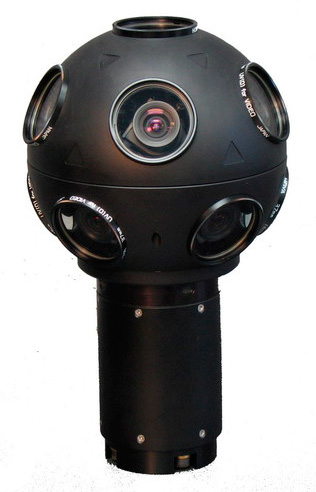
The camera used to create the images in Google Street View is called a Dodeca 2360, which is a softball-size camera that records from almost 12 different angles at 30fps.

Sources:
10. Name three computer operating systems (not for phones) that are NOT Apple OS or MS-Windows operating systems?
a) who created it and when? b) how can you get a copy of the operating system to use on your computer?
Unix: Development of Unix started in the late 1960s by members of the Multics team. Today, many other organisations and individuals contribute to the Unix that is used today. In 1991, a variant of Unix, called Linux, was introduced in Finland by a student named Linus Torvalds. Derivatives of Unix can be downloaded for free from here.
MS-DOS: v1.0 of MS-DOS was created and released by Microsoft in 1981. MS-DOS is short for Microsoft Disk Operation System and is a command line operating system. Most modern Windows based computers contain MS-DOS as well as the GUI, Microsoft Windows. To run a DOS operating system on its own, one can visit here and download FreeDOS, which is a DOS compatible OS for IBM-PC compatible systems.
Haiku: A fast and efficient open source operating system inspired by the BeOS, which specifically targets personal computing. Although work commenced on the Haiku OS in 2001, the system was not released until mid 2010. Haiku can be downloaded here for use on your computer, in the future, one will also be able to purchase an installation CD if that method of installation is preferred.
Sources:
So here I go, I am going to 'Ask Jeeves'!!.
1. What is the weight of the world’s biggest machine? How much did it cost to build?
This question tends to be a little ambiguous, as it asks the weight for the world's biggest machine but doesn't specify if biggest refers to heaviest or largest in physical dimensions.
One machine that would definitely be in contention for the winner of the heaviest machine would have to be the Knock Nevis, which is the world's largest supertanker and weighs a whopping 564 763 tonnes. The Knock Nevis cost an estimated $9 billion to be constructed.
In regard to actual physical size and dimensions, what I believe to be the world's largest machine is the Large Hadron Collider
, a particle accelerator located near Geneva, Switzerland. This machine has a length of 27km and a circumference of approximately 175m. The Large Hadron Collider cost approximately $8.4 billion in total to construct.
Sources:
http://www.bukisa.com/articles/40463_worlds-largest-machines-ever-built
http://www.vincelewis.net/viking.html
http://www.wisegeek.com/what-is-the-largest-machine-in-the-world.htm
http://www.moneyweek.com/news-and-charts/economics/what-is-the-worlds-biggest-machine-costing-us-13577.aspx
2. Find a live webcam in Antarctica. Can you find a place to stay in Antarctica?
<a href="http://www.live-webcam-directory.com/antarctica/live-webcam-mawson-station.html" title="Mawson Station live webcam">Mawson Station Live Webcam</a>
This links you to the live webcam at Mawson Station, Antarctica. This is a still image taken from the webcam.

Now, as for a place to stay in Antarctica, short of camping (brrr, forget that!), your best bet for accommodation is on a boat/ship as, apparently, there are no hotels physically located on the mainland. An example of a vessel that could be utilised as accommodation is the Aleksey Maryshev, which is not only a research vessel but also provides accommodation for up to 46 travelers.

Sources:
3. When and what was the first example of global digital communication?
Before I officially answer this question, can I just say that in the search results that I was perusing about global digital communication, I found a link to the contact information for Ozzy Osbourne.. Hmm, ok?! How very odd!!
Anyways, back to the real answer..
In 1837, line telegraphy was perfected and was noted as an important event in the history of electronic communication. In following years, things such as the telephone and wireless telegraphy were produced, improving communication systems further.
Sources:
http://glennavendano.com/Course_Lectures/Digital_Comm/OverviewDigitalComm.pdf
4. What is the cheapest form of travel from the Gold Coast to Melbourne?
The cheapest way I found to travel from the Gold Coast to Melbourne was via Tiger Airways. The question didn't specify where in Melbourne one was travelling to, so I checked fares for both the Tullamarine and Avalon airports. The cheapest flight available landed at Avalon airport in Melbourne and was a discounted sale fare priced at $46.34.
Sources:
http://www.webjet.com.au
http://booking.tigerairways.com/
5. Who is Douglas Engelbart? What is he known for?
Douglas Engelbart is most famous for his invention of the computer mouse, which was developed in the 1960s, but not used commercially until the 1980s. Engelbart invented a number of interactive, computer based systems years before personal computers became commonplace in society.
Sources:
http://www.ideafinder.com/history/inventors/engelbart.htm
6. What is the best way (quickest, most reliable) to contact Stephen Conroy? (who is this guy?)
My results for this search brought up several Stephen Conroys, including an artist, the Australian minister for Broadband and a lawyer based in Louisiana. For relevance sake, I will focus on the Australian minister for Broadband, but if you want contact details for either of the other two, let me know!
Stephen Conroy is the Australian Minister for Broadband, Communications and the Digital Economy. In this role, his responsibilities include overseeing the National Broadband Network, the digital television switchover, media policy, community broadcasting, as well as cyber security and safety.
As Stephen Conroy is obviously a very busy man, I'd suggest the best way to contact him would be via email. However, there are a range of other options, including telephone and fax, details of which can be accessed on his contact page.
Sources:
7. What song was top of the Australian pop charts this week in 1990?
For some reason, Asking Jeeves about this wasn't very helpful and it took me quite some time to find the answer to this question! But.. I do have it.. The number 1 song in the Australian Pop Charts for the week ending 28, January, 1990 was... *insert drumroll here*...
Love Shack by The B-52s!!

Wow, what a year 1990 was.. what a decade it started! I may well spend all day going through these charts and reminiscing now!!
Sources:
8. How would you define the term 'ontology'? In your own words, what does it really mean?
Definitions of 'ontology'
[on-tol-uh-jee] 
(noun)
1. the branch of metaphysics studying existence or being
Definitions of ontology
1. [n] - the metaphysical study of the nature of being and existence
My own interpretation of what ontology means:
Admittedly, I didn't know what this word meant before I had to answer this question, so hooray for learning new things. From what I have found out about my search, ontology basically is the study of one's existence and being; investigating the relationships between all beings and the principles and causes of being. (Wow, there are too many 'beings' in that sentence...)
Sources:
9. What type of camera is used to make ‘Google Street View’?1. [n] - the metaphysical study of the nature of being and existence
My own interpretation of what ontology means:
Admittedly, I didn't know what this word meant before I had to answer this question, so hooray for learning new things. From what I have found out about my search, ontology basically is the study of one's existence and being; investigating the relationships between all beings and the principles and causes of being. (Wow, there are too many 'beings' in that sentence...)
Sources:
The camera used to create the images in Google Street View is called a Dodeca 2360, which is a softball-size camera that records from almost 12 different angles at 30fps.
Sources:
10. Name three computer operating systems (not for phones) that are NOT Apple OS or MS-Windows operating systems?
a) who created it and when? b) how can you get a copy of the operating system to use on your computer?
Unix: Development of Unix started in the late 1960s by members of the Multics team. Today, many other organisations and individuals contribute to the Unix that is used today. In 1991, a variant of Unix, called Linux, was introduced in Finland by a student named Linus Torvalds. Derivatives of Unix can be downloaded for free from here.
MS-DOS: v1.0 of MS-DOS was created and released by Microsoft in 1981. MS-DOS is short for Microsoft Disk Operation System and is a command line operating system. Most modern Windows based computers contain MS-DOS as well as the GUI, Microsoft Windows. To run a DOS operating system on its own, one can visit here and download FreeDOS, which is a DOS compatible OS for IBM-PC compatible systems.
Haiku: A fast and efficient open source operating system inspired by the BeOS, which specifically targets personal computing. Although work commenced on the Haiku OS in 2001, the system was not released until mid 2010. Haiku can be downloaded here for use on your computer, in the future, one will also be able to purchase an installation CD if that method of installation is preferred.
Sources:
Monday, January 24, 2011
Tutorial Task 1.5 - Video Creation Using Windows Live Movie Maker
Please see my attempt at creating a video below. I chose to focus my theme around the recent South-East QLD floods, as it has been a disaster that has impacted many of us.
Unfortunately I do not have a lot of my own photos, so I have spent days scouring the Internet for photos, videos and sound files available under Creative Commons Licenses that I can use. All property that belongs to other people has been attributed to them in the video.
I hope you enjoy what I have put together.
This video is licensed under
CC BY-NC-ND 3.0.
Example of Tutorial Task 1.5 - Video Created Using Windows Movie Maker
Just thought I'd include an example of a video that Amanda Scells, who is also in this class, and I made in our first year of uni using Windows Movie Maker. This isn't my submission for assessment, rather just something for your amusement and to show an example of stop-motion animation using Movie Maker.
Creative Commons License: Attribution-NonCommercial-ShareAlike 3.0 Unported (CC BY-NC-SA 3.0)
http://creativecommons.org/licenses/by-nc-sa/3.0/
Creative Commons License: Attribution-NonCommercial-ShareAlike 3.0 Unported (CC BY-NC-SA 3.0)
http://creativecommons.org/licenses/by-nc-sa/3.0/
Response to Reading 1.5 – Creative Commons
Who knew that copyright could be so complicated? And that, with the phenomenon that is the Internet, copyright laws are being broken every minute of every day, with most of us not knowing, nor even caring?
It seems that Creative Commons was created to alleviate the copyright issues that lawmakers can’t seem to solve in this modern world. Creative Commons share a basic set of terms, where every user of your work has to attribute your name to your work; basic terms also state that only non commercial sharing of work is permitted, which means you can distribute the work as much as you please, as long as you don’t profit from the activity.
Users can also have more creative control by extending these terms further; these include allowing users to profit from using your work, allowing them to modify or adapt your work and requiring subsequent users to share their creations on the same terms.
I think these are all very positive terms, as it further promotes the use of Creative Commons. It also makes users aware of their rights and capabilities in regard to copyright. Copyright is generally of a very complex nature, using Creative Commons is easy to understand and makes sure users are aware of where they stand and what rights they do or do not have (Doctorow, 2007).
I was a little worried and confused about what to do about the video tutorial task for today, knowing that I don’t have a lot of my own photos and not wanting to breach copyright laws by using other peoples’; this wondrous little reading has solved those problems for me! Thank goodness for Creative Commons. This is yet another thing I have learnt this week that will be useful and that I will share with my friends (and possibly bore them to death with my incessant rambling and constant advice about their Internet use!).
References
Doctorow, C. (2007, November 08). Creative Commons. Retrieved January 23, 2011, from LOCUS online: http://www.locusmag.com/Features/2007/11/cory-doctorow-creative-commons.html
Subscribe to:
Posts (Atom)